-
From Wildfires to Floods: How AI is Reshaping Utility Risk Strategy

“Regional assumptions are outdated. Every electric utility, regardless of location, must be prepared for compound weather risk and multi-hazard disruption.”
For decades, electric utilities have relied on seasonal planning, historical averages, and static risk assessments to guide grid resiliency decisions. That era is over.
Today’s threat landscape moves faster than traditional tools can track. Wildfires ignite outside of fire season. Other extreme weather events, like flooding, overtake grid infrastructure. Wind events cripple urban service territories. And the expectations from regulators, insurers, and investors are shifting just as fast.
In a recent POWER Magazine webinar, leaders from CenterPoint Energy and Technosylva offered a firsthand look at how AI, machine learning, and real-time weather modeling can be embedded into grid strategy. The message was clear: electric utilities must evolve from risk awareness to risk accountability, and fast.
Wildfire and Extreme Weather Risk Is Local, But the Shift Is Industry-Wide
CenterPoint Energy’s service territory is not traditionally viewed as wildfire territory. Yet FEMA’s wildfire risk map revealed that Harris County has more wildfire-prone census tracts than any other county in the country.
This single insight reframed their resilience planning. It also underscored a larger truth: regional assumptions are outdated. Every electric utility, regardless of location, must be prepared for compound weather risk and multi-hazard disruption.
AI-Powered Modeling Changes What’s Possible
Technosylva’s platform simulates wildfire and extreme weather scenarios using real-time data and advanced weather forecasts. For electric utilities, that means:
- Forecasting outage severity days in advance
- Calculating risk at the circuit level
- Prioritizing grid hardening where the data shows it matters most
- Improving restoration timelines and customer communication
This is not theoretical. Don Daigler, Senior Vice President of Emergency Preparedness and Response at CenterPoint Energy, shared that modeling is helping CenterPoint estimate how many crews they may need, how long restoration could take, and where to place staging areas based on forecasted conditions.
From Resilience to Regulatory Alignment
AI and modeling are not just about mitigation. They are fast becoming the foundation of regulatory and financial credibility.
Regulators are asking more pointed questions. Credit rating agencies want to see data-backed resilience plans. Insurers are tightening coverage, if they offer it at all. Stakeholders at every level are demanding more than good intentions. They expect electric utilities to demonstrate readiness with operational data.
The implications are clear: resilience strategy is no longer internal. It is visible, judged, and tied directly to access to capital, regulatory standing, and public trust.
Looking Ahead: Integration Is the Imperative
Leading electric utilities are doing more than evaluating software or building dashboards. They are integrating modeling into core operations, breaking silos between emergency preparedness, asset planning, and enterprise risk. They are training operators on live situational awareness and modeling impact. And they are aligning their planning with regulatory frameworks from day one.
The next phase of utility resilience is not about adopting a tool. It is about building a system of accountability that is driven by real-time intelligence and aligned with what is at stake – financially, operationally, and reputationally.
Watch the webinar replay below to get more depth from the conversation

-
What Stood Out: 5 Key Insights from Our AI + Grid Resilience Conversation

“This approach helps us determine how many resources we’ll need, how long restoration may take, and where to position staging sites.”
Don Daigler
CenterPoint Energy
As extreme weather intensifies, utilities are under pressure to rethink how they plan, respond, and invest in grid resilience. In a recent session hosted by POWER Magazine, Don Daigler, SVP of Emergency Preparedness and Response at CenterPoint Energy, joined experts from Technosylva to explore how AI and weather modeling are beginning to inform utility strategies, and where the industry is headed next.
Whether you’re just starting to explore these tools or already building your capabilities, the conversation highlighted early lessons that can help guide smarter, more adaptive decision-making.
Here are five key takeaways from that discussion:
1. Traditional Tools Alone Cannot Handle Today’s Risk
From wildfires and hurricanes to flooding and extreme wind, weather threats are increasing in both severity and complexity. Static assessments and after-the-fact analysis are no longer enough. Electric utilities must shift from reacting to predicting, and from predicting to pre-positioning.
2. All-Hazards Strategy Is the Only Way Forward
Daigler emphasized that, “80 to 90 percent of what you do for one hazard applies to another.” Electric utilities need flexible, integrated planning that treats all major weather threats as systemic risk factors that require real-time situational awareness.
3. Predictive Modeling Supports Smarter Decisions at All Levels
Technosylva’s wildfire and extreme weather risk modeling is helping electric utilities forecast event severity, asset impact, and restoration timelines with circuit-level precision. Daigler explained how this approach supports decisions about how many resources will be needed, how long it may take to restore power, and where to position staging sites.
These insights are starting to influence both strategic planning and daily operations, from crew readiness to customer communication.
4. Modeling Must Be Local and Operationally Aligned
CenterPoint Energy’s territory isn’t typically thought of as wildfire-prone, yet FEMA’s wildfire risk map showed Harris County has more wildfire-prone census tracts than any other county in the U.S. The lesson is clear: no region is immune. Electric utilities cannot assume risk is someone else’s problem. Modeling must be adapted to local hazards, grounded in operational realities, and aligned with regulatory and emergency response goals.
5. AI and Data Are Now Core to Resilience and Stakeholder Accountability
Regulators, credit rating agencies, and insurers are increasingly focused on how electric utilities use data to support mitigation strategies. Integrating AI and machine learning for modeling into daily operations is becoming essential for building credibility, managing financial exposure, and improving long-term resilience.
Watch the webinar replay below to get more depth from the conversation
-
How One Electric Utility Is Using AI and Extreme Weather Modeling to Make Critical Grid Decisions
Duration: 1 Hour
Electric utilities are facing increasingly complex weather threats, from wildfire to extreme weather events impacting grid reliability. In this webinar, CenterPoint Energy and Technosylva explore how machine learning, predictive modeling, and AI are supporting more informed, data-driven critical decisions around grid readiness, resource planning, and resilience.
Whether you’re in early planning or already evaluating tools, this session offers practical insights for what comes next.
Get 5 key takeaways from the conversation
Inside the industry’s evolving approach to climate riskSpeakers
Don Daigler
SVP of Emergency Preparedness and Response
CenterPoint EnergyJoaquin Ramirez
Co-Founder & CTO
TechnosylvaDavid Zipkin
SVP of Product
TechnosylvaSonal Patel
Editor/Moderator
POWER magazine -
NASA Promotes Technosylva’s Use of Satellite Data for Wildfire Risk Reduction

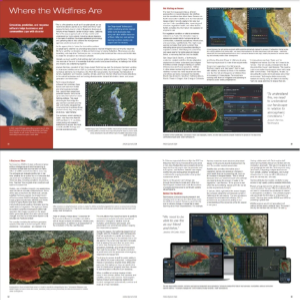
Technosylva’s wildfire risk modeling gets a boost from space. The company’s innovative approach in leveraging NASA satellite data is featured by NASA in its 2024 Spinoff report, highlighting how space technology tackles real-world challenges. That view from space provides companies like Technosylva with the valuable data needed to confront some of Earth’s greatest challenges.
Public-private partnership in action. This 20-year data collaboration between Technosylva and NASA is a prime example of how government and industry can join forces. Joaquin Ramirez, Technosylva’s President & CTO, said that this is the, “Perfect example of how to work as technologists, bringing the good scientific data to the operational tools.” This work advances the operations for leading wildfire agencies and electric utilities alike.
Space data = smarter firefighting. “NASA provides us with the intelligence and data needed to advance wildfire science,” Ramirez explains. “Thanks to their observations of wildfire and the connection with our fire modeling and science, we can make new models and improve the actual fire behavior models to advance understanding in other places like Europe, Canada, and South America. Previously, that ability did not exist and now, thanks to hotspot data, for instance, we can address the evolving wildfire risks.”
The future of wildfire management. Technosylva’s use of NASA tech isn’t just about today’s fires. It’s about building a robust wildfire risk modeling roadmap for the future. Climate change is intensifying wildfires, making access to accurate, real-time data critical for prevention and mitigation.
Want to learn more? See how Technosylva puts NASA satellite data into action and how leading wildfire agencies and electric utilities are leveraging this science on the ground.