Article
Electric Utility Customers Expect Better Communication on Wildfire Risk

It’s not about framing PSPS as a failure. It’s about helping the public see it as a necessary tool to prevent tragedy.
A well-executed Public Safety Power Shutoff (PSPS) can prevent a catastrophic wildfire. But if the customers affected by that shutoff do not understand why it happened, what it prevented, and how the decision was made, the operational success can still become a communications failure.
For electric utility operations teams, this is an increasingly important part of the job. Managing wildfire risk is not just a technical challenge anymore. It is a trust challenge.
The Gap Between What Utilities Know and What Customers Understand
Utility risk managers live with the complexity of wildfire operations every day. They understand fuel conditions, ignition probability, circuit-level risk, and the tradeoffs involved in a de-energization decision. Their customers do not, and they should not have to. What customers do need is enough context to understand that the utility is making careful, informed decisions on their behalf.
That context is currently missing in many PSPS communications. When customers receive a shutoff notice with limited explanation, or hear about a PSPS after the fact through news coverage, the most natural response is frustration. The utility turned off the power. Nothing happened. Why was that necessary?
The answer to that question, clearly communicated, is what separates utilities that build trust through wildfire operations from those that erode it.
Reframing PSPS as a Standard of Care
Part of the communication challenge is that PSPS is still widely described, including by utilities themselves, as a measure of last resort. That framing made sense when PSPS events were rare. It is increasingly at odds with the reality that PSPS is becoming a standard operational tool for utilities operating in wildfire-prone conditions, including many that did not historically see themselves as high-risk.
Customers who hear “last resort” and then experience multiple PSPS events in a season begin to question either the utility’s judgment or its honesty. A more accurate framing is that PSPS is a proactive safety measure, one that a responsible utility deploys when the risk of an asset-caused ignition crosses a threshold that justifies temporary disruption to prevent permanent harm.
Making that case clearly and consistently, before, during, and after events, is what builds the kind of public understanding that sustains a utility’s ability to use this tool when it is needed.
What Better Communication Actually Looks Like
Leading utilities are approaching PSPS communication in three ways that smaller utilities can adopt regardless of the size of their operations or communications teams.
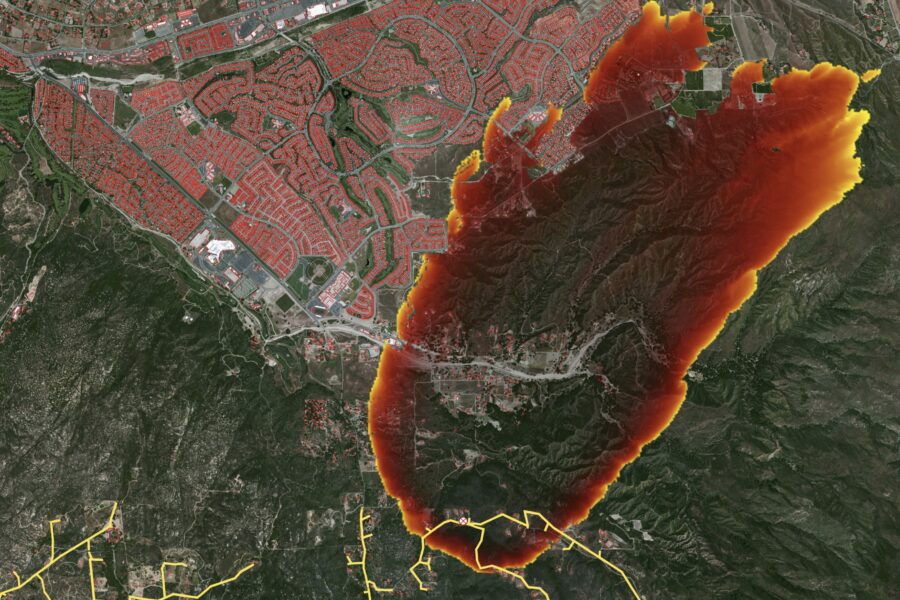
The first is making the risk concrete. Abstract language about elevated fire weather conditions does not land with most customers. What does land is specificity: the number of structures that could have been in a fire’s path, the neighborhoods that would have been affected, the conditions that made that day different from a normal windy day. When utilities share the forecast and simulation data that drove their decision, in accessible terms, customers can begin to understand what the shutoff actually prevented.
The second is communicating before the event, not just during it. Customers who receive advance notice, with a clear explanation of what is coming and why, are far better prepared to manage the disruption than those who find out at the last minute. Even a smaller utility with limited staff can establish simple, consistent notification protocols that give customers enough lead time to make arrangements and enough information to understand the reasoning.
The third is building relationships outside of events. The utilities that navigate PSPS communications most effectively are the ones that have already established credibility with their communities before a high-risk weather season begins. That means being visible about proactive mitigation efforts, sharing information about what the utility is doing to reduce ignition risk year-round, and creating channels for community feedback that go beyond crisis notifications.
The Bottom Line
Customers are not asking utilities to eliminate wildfire risk overnight. They are asking to be treated as partners in managing it. That means honest, timely, and accessible communication about what the utility knows, what it is doing, and why the decisions it makes during high-risk events are the right ones.
For operations teams building or refining their PSPS programs, communication is not a separate workstream from the operational work. It is part of it. A shutoff decision that is well-explained is a decision that holds up, with customers, with regulators, and with the broader community the utility is there to serve.