Article
Powering Down for Safety: The New Reality of Electric Utility Operations

“The decision to implement a PSPS is never taken lightly. But in an era of escalating wildfire risk, it may be one of the most important decisions a utility makes.”
For decades, the core mission of an electric utility has been straightforward: keep the lights on. Reliability was the scorecard. Outages were the enemy. That mission has not changed, but the conditions surrounding it have.
Public Safety Power Shutoffs (PSPS), the practice of proactively de-energizing lines that pose an ignition risk during dangerous weather conditions, have become an essential part of wildfire mitigation for utilities across the country. For many utilities, especially those that have not historically dealt with significant wildfire exposure, building a PSPS program represents a genuine operational and cultural shift. It asks utility teams to do something that runs counter to everything they have been trained to prioritize: intentionally turn off the power.
Understanding why that shift is necessary, and how to make it work, is where most utilities need to start.
Why PSPS Is Becoming a Standard of Care
PSPS is no longer just a tool used by large California utilities. Regulators across the country are increasingly expecting utilities of all sizes to have a PSPS program in place, even if they do not anticipate using it frequently. The underlying logic is straightforward: when weather conditions create a high risk of an asset-caused ignition, proactively de-energizing the at-risk lines is preferable to allowing an uncontrolled outage or, worse, a wildfire.
Allowing extreme weather conditions to dictate the outcome, rather than acting ahead of them, removes control from the utility entirely. A forced outage under high-wind, low-humidity conditions carries the same ignition risk as an intentional one, but without any of the preparation, communication, or community protection that a well-executed PSPS provides.
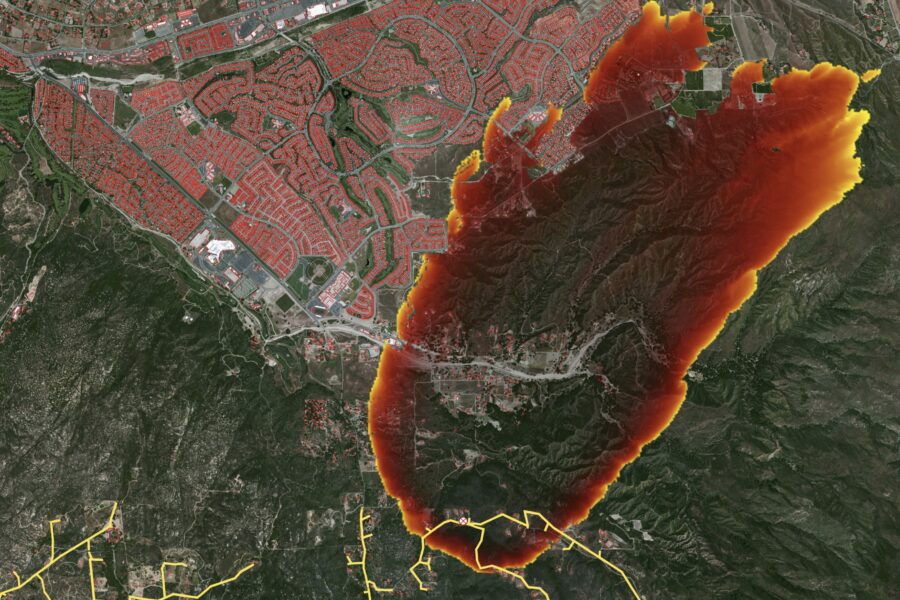
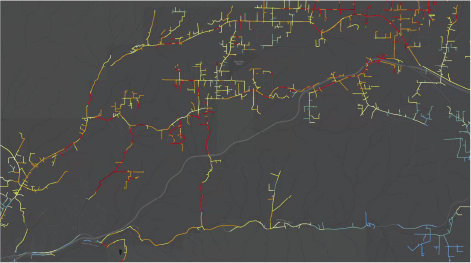
The shift toward what many utilities now call a “surgical PSPS” reflects a maturation in how this tool is being applied. Rather than shutting off power across broad areas whenever a Red Flag Warning is issued, utilities are using better risk intelligence to isolate the specific circuits where ignition risk is genuinely elevated. The result is fewer customers affected, shorter outage durations, and more defensible decisions.
What Operationalizing PSPS Actually Looks Like
For utilities building or refining a PSPS program, the process typically involves three connected challenges.
The first is identifying risk early enough to act. Most utilities have a 48 to 72 hour customer notification requirement before a PSPS event. That window sounds manageable until you consider what needs to happen inside it: analyzing weather forecasts, assessing fuel and terrain conditions across potentially thousands of miles of line, identifying candidate circuits, and making go or no-go decisions with incomplete information. For smaller utilities without large operations centers or dedicated meteorological support, that compressed timeline can be particularly demanding. Access to reliable forecasted risk data, updated continuously, is what makes the difference between a confident decision and a reactive one.
The second is the decision itself. Utility personnel making PSPS calls are balancing real competing interests. Customers lose power, sometimes for extended periods. Businesses are disrupted. Medically dependent customers face heightened risk. These are not abstract tradeoffs. The best PSPS programs build clear decision frameworks that give operations teams the authority and the data they need to make those calls without hesitation when conditions warrant it.
The third is communication. A well-executed PSPS is not just an operational event, it is a communication event. Customers who understand why power is being shut off, what conditions triggered the decision, and when they can expect restoration are far more likely to accept the disruption than those who receive little to no explanation. Leading utilities are investing in transparent, proactive communication before, during, and after PSPS events, and the trust that builds over time is one of the most durable outcomes of doing this well.
The Bottom Line
Building a PSPS program is achievable for utilities of any size. It does not require an unlimited budget or a large dedicated team. It requires clear protocols, reliable risk data, and a willingness to reframe what operational excellence looks like in a world where wildfire risk is part of the job.
The utilities navigating this transition most successfully are not the ones that have eliminated the tension between reliability and safety. They are the ones that have learned to manage it, one well-informed decision at a time.
Related Posts