Article
PSPS Is Not a Decision Taken Lightly by Electric Utilities

The goal of a PSPS program is not to shut off power indiscriminately. It is to make sure that when conditions require it, you can act surgically, decisively, and with confidence.
What a PSPS Actually Is
A PSPS is the proactive de-energization of power lines and equipment during weather conditions that create an elevated risk of an asset-caused ignition. When winds are strong, humidity is low, and fuels are dry, damaged or downed equipment can spark a fire that spreads rapidly. By shutting off power to at-risk circuits before those conditions peak, a utility removes the ignition source from the equation and maintains control over the situation.
The alternative, waiting to see what happens, carries real risk. An unplanned outage under high-wind, low-humidity conditions carries the same ignition potential as a planned one, but without any of the preparation, crew positioning, or customer communication that a well-executed PSPS provides. A utility that acts proactively has options. One that waits for conditions to force the issue has fewer of them.
Why It Is Never an Easy Call
For anyone who has spent a career in utility operations, the instinct to keep the lights on runs deep. Reliability is the core of what utilities do and how they measure success. Intentionally shutting off power to customers, sometimes tens of thousands of them, for an extended period runs directly against that instinct.
That tension is real and worth acknowledging. A PSPS affects customers and communities, and the operations teams making that call understand the responsibility that comes with it.
What makes it manageable is having a clear framework for the decision and the data to support it. When an operations team can see, days in advance, that specific circuits in their territory will carry elevated ignition risk on a given day, and can quantify what a fire starting from one of those circuits could affect in terms of structures and population, the decision becomes more grounded. It does not get easier, but it gets clearer.
What Good PSPS Execution Looks Like
The utilities that execute PSPS programs most effectively share a few common characteristics regardless of their size.
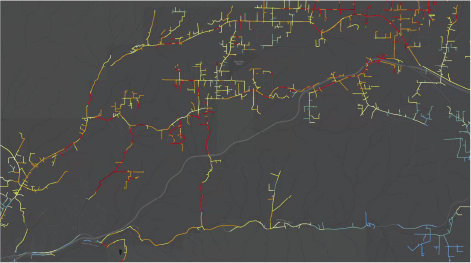
They are working with current, granular risk data. Rather than relying on broad weather warnings to trigger their process, they are monitoring circuit-level ignition risk on a rolling basis, updated continuously as forecasted conditions evolve. That means when a high-risk period is developing, they already know which circuits are candidates for de-energization before the decision window opens.
They have clear protocols in place before they need them. The 48 to 72 hour customer notification window that most utilities operate under is not much time if the operational analysis is still happening. Utilities that have pre-defined their decision criteria, communication templates, and crew deployment plans can move quickly and confidently when conditions warrant it.
They make PSPS events as surgical as possible. A PSPS that affects only the circuits where risk is genuinely elevated impacts fewer customers, requires less restoration work, and is far easier to explain and defend than a broad area shutoff. For smaller utilities where every outage has a disproportionate impact on the community, that precision matters especially.
And they communicate clearly throughout. Customers who understand what triggered the shutoff, what it was designed to prevent, and when restoration is expected are far more likely to accept the disruption than those who receive minimal information. Clear communication before, during, and after a PSPS event is not a secondary consideration. It is part of what makes the program work.
The Bottom Line
PSPS programs are becoming a standard part of wildfire risk management for utilities across the country, including many that are building this capability for the first time. The goal is not to use PSPS frequently. It is to have the data, the protocols, and the organizational readiness to use it well when conditions require it, and to make each event as targeted, as brief, and as well-communicated as possible.
A PSPS done well protects communities. It also demonstrates that a utility understands its risk, takes it seriously, and is prepared to act on it. That is worth the difficulty of the decision.
Related Posts